
Thanksgiving Stain Emergency Guide: What to Do Before You Reach for the Stain Remover
Thanksgiving dinner has a way of producing two things in abundance: memories and stains.
The table is crowded.
People are passing dishes.
Children are moving between rooms.
Someone reaches across the table.
A glass tips.
A serving spoon slips.
And suddenly the cranberry sauce isn’t on the plate anymore.
When a holiday spill lands on a favorite blouse, dress shirt, sweater, tablecloth, or cloth napkin, the natural reaction is to fix it immediately.
That’s also when people sometimes make the stain worse.
The first few minutes after a spill can matter—but acting quickly doesn’t mean acting aggressively.
At A.W. Cleaners, we’ve spent more than 40 years helping local families care for clothing and household textiles after life’s inevitable accidents.
So if Thanksgiving dinner leaves something behind, here’s what to know before reaching for whatever stain-removal product happens to be under the sink.
First Rule: Don’t Panic
A stain is frustrating.
It isn’t automatically permanent.
Many stains can often be improved or removed, particularly when they’re addressed promptly and haven’t already been altered by inappropriate treatment.
The safest immediate goal isn’t necessarily to make the stain disappear. It’s to avoid making the situation worse.
Before doing anything else: stop, identify, blot, and check.
Determine what spilled.
Remove excess material carefully when appropriate.
Blot liquid rather than aggressively rubbing it into the fibers.
And check the garment’s care instructions before applying water, heat, detergent, bleach, or another chemical.
If the item is valuable, delicate, sentimental, or dry-clean-only, consider leaving further treatment to a professional. These are the most common stains:
1. Gravy: A Combination Stain
Gravy looks simple.
From a stain-removal perspective, it may be anything but.
Depending on the recipe, gravy can contain:
- Fat
- Oil
- Meat proteins
- Dairy
- Flour or starch
- Seasonings
- Coloring
That means you’re potentially dealing with multiple stain components at the same time.
Scrubbing may spread the oily portion farther into the fabric.
Instead, carefully lift away excess gravy without grinding it into the textile and blot where appropriate.
Avoid heat until you understand the fabric and stain involved.
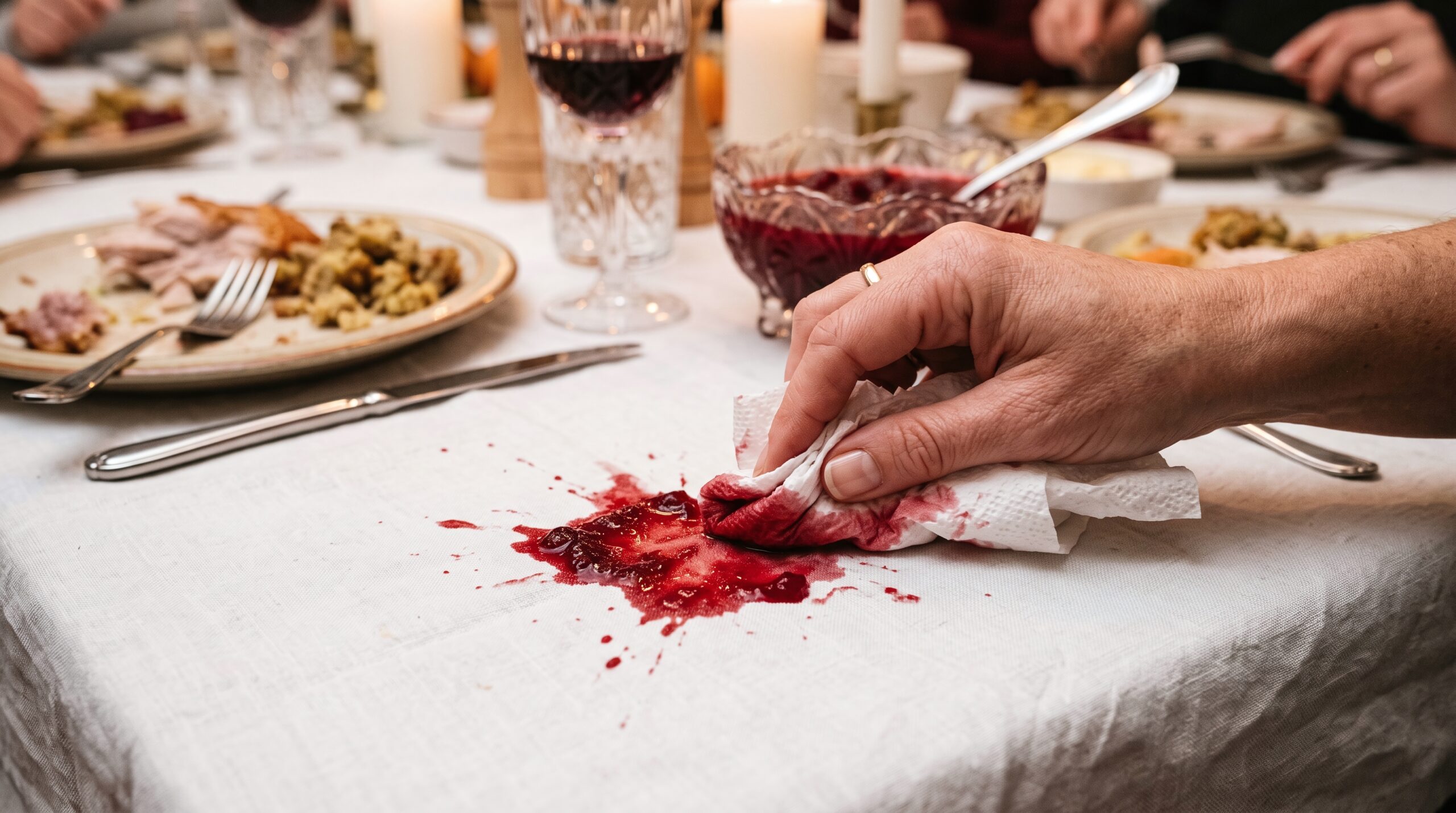
2. Cranberry Sauce: Bright Color, Serious Pigment
Cranberry sauce looks beautiful next to turkey.
It looks significantly less festive on a white blouse.
Its strong natural pigments can leave noticeable discoloration, particularly when allowed to remain on fabric.
Gently remove excess sauce and avoid vigorous rubbing.
The sooner the textile receives appropriate care, the better the opportunity for treatment.
And if you’ve already tried something at home, tell your cleaner.
Previous stain treatments can affect what happens next.
3. Butter and Cooking Oil: The Stain You May Not Notice Immediately
Oil-based stains can be deceptive.
Sometimes they’re obvious.
Other times they initially appear as nothing more than a slightly darker area of fabric.
Then the garment goes into the closet.
Days or weeks later, the mark becomes more noticeable.
Thanksgiving introduces plenty of opportunities for oily stains: butter, salad dressing, gravy, cooking oils, cream sauces, and desserts.
Don’t assume a faint grease mark will simply disappear on its own.
If it remains after the event, have the garment evaluated before storing it for an extended period.
4. Red Wine: Blot, Don’t Scrub
Few spills create holiday panic quite like red wine on a light-colored textile.
Your first instinct may be to start rubbing.
Resist it.
Blotting helps absorb liquid without intentionally spreading it across a larger area.
And be cautious about the many home remedies associated with wine stains.
A treatment that’s harmless to one textile may affect the color or finish of another.
The garment and stain have to be considered together.
5. Coffee and Tea: Don’t Forget What’s in the Cup
Coffee and tea contain tannins, but the stain may involve more than the beverage itself.
Was there cream?
Milk?
Sugar?
Flavored syrup?
The answer matters because a sweetened latte and black coffee don’t necessarily create identical stains.
Blot the spill and remember what was in the drink.
That information may be useful during professional stain evaluation.
6. Chocolate and Pie: Dessert Can Be Complicated
Pumpkin pie.
Chocolate cake.
Brownies.
Whipped cream.
Ice cream.
Holiday desserts can combine sugars, fats, dairy ingredients, coloring, fruit, and other components.
Again, what looks like one stain may contain several substances.
Avoid rubbing dessert deeper into the garment.
Carefully remove excess material, and don’t expose an unknown stain to unnecessary heat.
7. Candle Wax: Let It Cool
Candles create a beautiful Thanksgiving table.
Wax on a tablecloth is less charming.
If wax drips onto fabric, don’t aggressively wipe it while it’s still liquid. That may spread it farther across the textile.
Allow it to cool before carefully removing loose excess material when doing so won’t damage the fabric.
Remaining wax, oils, dyes, or residue may require additional treatment.
For a treasured tablecloth, aggressive scraping or high-heat DIY treatment may create more damage than the original spill.
8. Makeup: The Unexpected Thanksgiving Stain
Not every Thanksgiving stain comes from the table.
Foundation can transfer onto a coat collar when relatives hug.
Lipstick can reach napkins.
Cosmetics may transfer onto scarves, blouses, dresses, and guest linens.
Makeup can contain oils, waxes, pigments, and other ingredients, making aggressive rubbing a poor first response.
If the garment is important, blot or remove excess carefully and have the stain evaluated.
Why Random Home Remedies Can Be Risky
Search online for stain removal, and you’ll encounter endless suggestions:
- Vinegar
- Baking soda
- Dishwashing liquid
- Hydrogen peroxide
- Alcohol
- Salt
- Bleach
- Hot water
- Cold water
Some approaches can be useful under the right circumstances. The appropriate treatment depends on factors such as:
- Fiber content
- Dye stability
- Fabric finish
- Garment construction
- Stain chemistry
- Stain age
- Care instructions
- Previous treatment
There is no single homemade solution that’s safe and effective for every stain on every fabric.
That’s especially important when the item is expensive, delicate, vintage, sentimental, or difficult to replace.
Never Hide What You’ve Already Tried
If you’ve attempted stain removal before bringing a garment to a professional, say so.
That’s useful information.
Tell your cleaner:
- What caused the stain, if known.
- When it happened.
- What product you applied.
- Whether you used hot or cold water.
- Whether the garment went through a washer or dryer afterward.
Professional stain care involves solving a problem. The more accurate information available, the better.
Be Especially Careful With “Dry Clean Only”
If the care label indicates professional cleaning, Thanksgiving dinner isn’t the ideal time to experiment.
A visible stain can feel urgent, but an aggressive home treatment may affect:
- Color
- Texture
- Finish
- Shape
- Trim
- Embellishments
The stain is only half the equation. Preserving the garment matters, too.
Table Linens Need Attention After Dinner
Your clothes aren’t the only textiles absorbing Thanksgiving.
After the guests leave, inspect:
- Tablecloths
- Cloth napkins
- Table runners
- Fabric placemats
- Decorative linens
Don’t simply fold a seemingly clean tablecloth and put it away until next November.
Some food and beverage residue can be difficult to see initially and become more noticeable with time.
Cleaning holiday linens appropriately before storage can help prevent this year’s dinner from becoming next year’s mystery stain.
The Morning After Thanksgiving: Do a Five-Minute Check
Before turning your attention completely to Black Friday, leftovers, or travel, do a quick textile check.
Walk through the house and look for the items used the day before.
Check holiday clothing.
Look at children’s outfits.
Inspect table linens.
Look at the sweater someone wore during dinner.
Check the coat with makeup along the collar.
Find the napkin that caught the wine spill.
Five minutes now may save considerable frustration later.
When Professional Stain Care Makes Sense
Professional evaluation is particularly worth considering when:
- The care label calls for professional cleaning.
- The fabric is delicate.
- The garment is expensive.
- The item has sentimental value.
- The stain is oil-based or complicated.
- The textile is vintage.
- Previous treatment hasn’t worked.
- You’re unsure what caused the stain.
- You’re simply worried that another attempt could cause damage.
Professional cleaning still can’t guarantee that every stain will disappear.
Some stains permanently alter dyes or fibers.
But thoughtful treatment gives the garment a better opportunity than blindly trying one product after another.
Enjoy Thanksgiving First
There’s an important point underneath all of this advice: Don’t let a spill ruin Thanksgiving.
Accidents happen because people are actually using the clothes, linens, and homes they love.
A stained tablecloth usually means someone gathered around the table.
A spot on a child’s holiday outfit may mean they had an excellent dessert.
A little wine on a napkin isn’t the most important thing that happened that evening.
Take sensible action.
Then return to the people around you.
The stain can wait long enough for you to finish making the memory.
Why Families Trust A.W. Cleaners
For more than four decades, A.W. Cleaners has helped families throughout Baltimore, Carroll, and Harford counties care for garments and household textiles through ordinary days and important celebrations.
We understand that stain removal requires realistic expectations.
Not every stain can be removed completely.
But knowing what caused it, avoiding unnecessary home treatment, and seeking appropriate care promptly can often make a meaningful difference.
Save the Memories, Not the Stains
When Thanksgiving ends, you’ll want to remember the meal.
The laughter.
The family stories.
The photographs.
The traditions.
The stain on your favorite sweater doesn’t need to become part of that history.
Thanksgiving spill? Blot—don’t panic.
When possible, tell us what spilled and anything you’ve already tried. We’ll help determine the appropriate next step.
Frequently Asked Questions
What’s the first thing I should do after a Thanksgiving spill?
Remove excess material carefully when appropriate and gently blot liquids rather than rubbing them farther into the fabric. Check the care label before applying cleaners, water, or heat.
Can gravy stains be removed?
Many gravy stains can often be improved or removed, but gravy may contain fats, proteins, and other ingredients. Results depend on the fabric, stain, time elapsed, and previous treatment.
Should I use hot water on food stains?
Not automatically. Heat can make some stains more difficult to address and may be inappropriate for certain fabrics. Follow the care label and avoid guessing when the garment is valuable or delicate.
Can old cranberry or wine stains be removed?
Some older stains can be improved, but age, oxidation, previous treatment, fabric, and dye stability all affect the outcome. Complete removal cannot be guaranteed.
Should I tell my dry cleaner what caused the stain?
Yes. Knowing whether the substance was wine, gravy, oil, makeup, coffee, chocolate, or something else can be useful when evaluating treatment.
What if I already used stain remover?
Tell your cleaner what product you used and what you did afterward. Previous treatment can affect the stain and textile.
Should Thanksgiving table linens be cleaned before storage?
Yes, when appropriate for the textile. Food and beverage residue may remain even when stains aren’t immediately obvious, so cleaning before long-term storage is preferable.